















6 Best Water Filter Types for Removing PFAS: Deep Comparison
Learn why PFAS "forever chemicals" resist standard water treatment and discover the 6 most effective filtration technologies that remove 90-99% of these harmful compounds from your drinking water.


Published September 18, 2025

Your morning coffee tastes fine. Your shower feels normal. But invisible threats lurk in every drop. PFAS, known as "forever chemicals", contaminate water supplies across the globe, accumulating in your body over decades and linking to cancer, thyroid disease, and reproductive problems.
The right water filter can remove up to 99% of PFAS compounds from your drinking water. But not all filters are created equal. Some reverse osmosis systems excel at capturing long-chain PFAS but miss shorter variants, others generate massive wastewater, and many fail after just months of use.
This guide breaks down the 6 most effective PFAS filtration technologies, revealing which systems deliver real protection and which ones waste your money.
» Learn how to remove microplastics and filter your drinking water
Our Picks for the Best Water Filter Types for Removing PFAS
- Best overall PFAS water filter: Reverse Osmosis Systems
- Best budget-friendly PFAS water filter: Granulated Activated Carbon (GAC)
- Best PFAS water filter for short-chain compounds: Ion Exchange Systems
- Best PFAS water filter for moderate waste generation: Nanofiltration Systems
- Best advanced PFAS water filter technology: Electrochemical Oxidation Systems
- Best eco-friendly PFAS water filter: Bio-Based Adsorbents

Reverse Osmosis Systems
Removes 95-99% of PFAS compounds through high-pressure membrane filtration, providing the most comprehensive household protection available.

Granulated Activated Carbon (GAC)
Widely available and affordable option that removes 90-95% of long-chain PFAS through surface adsorption on porous carbon granules.

Ion Exchange Systems
Specialized resins target both short- and long-chain PFAS with 99%+ removal efficiency under optimal conditions, excelling where other systems fail.
Show more
What are PFAS in Drinking Water
PFAS compounds possess unique chemical properties that make them exceptionally difficult to filter from drinking water. Their carbon-fluorine bonds are among the strongest in organic chemistry, creating molecules that resist breakdown even under extreme conditions [1].
These "forever chemicals" earned their nickname because they persist in the environment and human body for decades. The molecular structure of PFAS creates multiple challenges for filtration systems.
What Makes PFAS Hard to Remove
Their small size allows many variants to slip through standard water filters, while their surfactant properties help them remain dissolved in water rather than settling out naturally.
Short-chain PFAS (those with fewer than 8 carbons) prove especially problematic, often passing through filters that effectively capture longer-chain compounds.
Current PFAS Regulations
Existing guidelines for acceptable PFAS levels vary dramatically worldwide, creating confusion for consumers trying to protect their families [2].
The World Health Organization recommends minimizing contamination and maintaining concentrations "as low as reasonably practical," but specific limits differ significantly between countries.
- United States: In April 2024, the EPA established Maximum Contaminant Levels (MCLs) of 4 parts per trillion (ppt) each for PFOS and PFOA, with 10 ppt limits for PFNA, PFHxS, and HFPO-DA (GenX). Additional compounds are regulated using a hazard calculation index of 1.0 unitless.
- European Union: The EU sets stricter standards with 100 ng/L for the sum of 20 PFAS compounds and 500 ng/L for total PFAS.
- Australia: Australian Drinking Water Guidelines specify 8 ng/L for PFOS and 200 ng/L for PFOA, showing the wide variation in international approaches.
» Learn about reverse osmosis filters and if they're safe for drinking water
Health Risks of PFAS Exposure
Research reveals that PFAS exposure affects multiple body systems, though health effects typically emerge after long-term exposure rather than immediate consumption. These systemic toxins accumulate in the blood, liver, and kidneys, potentially remaining in your body for years [3].
Current epidemiological studies link PFAS exposure to:
- Cancer Risk: Increased likelihood of kidney and testicular cancers
- Reproductive Health: Reduced fertility in women and pregnancy complications
- Cardiovascular Effects: Higher blood pressure, especially in pregnant women
- Immune System Disruption: Altered immune response and increased infection risk
- Metabolic Disorders: Elevated cholesterol levels and thyroid dysfunction
Immediate symptoms of water contamination can include dizziness, nausea, skin rash, and gastrointestinal illness. But the most concerning effects, reproductive disorders, cancer, and neurological problems, develop gradually over time, making early detection and prevention vital.
» Learn the health benefits of reverse osmosis water
Testing Your Water for PFAS Contamination
The most reliable way to test for PFAS in water is through professional lab testing. Labs use advanced tools like LC-MS/MS (liquid chromatography with mass spectrometry), which can pick up even tiny amounts of PFAS, as low as a few parts per trillion.
EPA-approved methods (537.1 and 533) are often used because they are very accurate.
Some labs also do total fluorine (TF) or total organic fluorine (TOF) tests, which are helpful when you suspect PFAS types that aren’t normally checked. With combined testing, labs can spot up to 29 different PFAS chemicals, giving a full picture of water quality.
There are home test kits, but they aren’t very reliable. If you want accurate results to know what kind of filter you need, certified lab testing is still the best option.
» Check out the best water filters for contaminant-free water
Our Top 6 PFAS Water Filters
1

Reverse Osmosis Systems
Removal Efficiency
95-99% for most PFAS compounds
Installation Required
Yes - professional installation recommended
Filtration Accuracy
0.0001 microns
Why it works for PFAS
Reverse osmosis systems represent the gold standard for household PFAS removal. These systems force water through incredibly fine membranes that physically block PFAS molecules, regardless of their chemical properties.
Tests conducted by the University of Arizona consistently demonstrate RO systems achieving over 90% removal rates across a broad spectrum of PFAS compounds.
Why it' great for PFAS removal
RO membranes create a physical barrier that prevents PFAS molecules from passing through.
The high pressure forces pure water molecules through while leaving contaminants behind, including both long-chain and short-chain PFAS variants.
Key limitations
- Substantial water waste—typically 3-6 gallons discarded for every gallon produced
- High initial costs and ongoing maintenance requirements make RO systems a significant investment
- May not remove 100% of all PFAS variants, though removal rates typically exceed 90-99%
2

Granulated Activated Carbon (GAC)
Removal Efficiency
90-95% for long-chain PFAS
Installation Required
No - countertop and under-sink options available
Filtration Accuracy
Varies by carbon quality and age
Why it works for PFAS
GAC filters work through adsorption, trapping PFAS molecules within beds of porous carbon. This technology has been extensively studied and remains the most widely available option for PFAS removal.
EPA-backed research confirms GAC effectively removes long-chain PFAS like PFOA and PFOS, particularly when carbon is regularly replaced.
Why it' great for PFAS removal
The porous carbon surface provides millions of adsorption sites where PFAS molecules become trapped.
The process is most effective for longer-chain compounds that have a stronger attraction to carbon surfaces.
Key limitations
- Struggles with short-chain PFAS removal, and performance decreases as filters age
- Replacement costs can become substantial with high PFAS concentrations
- Backwash water contains concentrated PFAS, requiring proper disposal
- Breakthrough can occur with certain PFAS variants
3

Ion Exchange Systems
Removal Efficiency
99%+ under optimal conditions
Installation Required
Yes - typically under-sink or whole-house systems
Filtration Accuracy
Selective for specific ion types
Why it works for PFAS
Ion exchange systems use specially engineered resins to target both short- and long-chain PFAS varieties.
Research by the Water Research Foundation shows that anion exchange resins can perform as well as GAC while offering superior selectivity and longer operational lifespans.
Why it' great for PFAS removal
Specialized resins are designed to selectively bind PFAS ions, swapping them for harmless ions attached to the resin.
This targeted approach allows for effective removal of problematic short-chain PFAS that other systems miss.
Key limitations
- Higher upfront costs compared to GAC systems
- The regeneration process produces concentrated brine waste containing PFAS
- Performance varies depending on specific PFAS molecules and resin types
- Some PFAS are potentially displaced by competing organic compounds
4

Nanofiltration Systems
Removal Efficiency
70-90% depending on PFAS type
Installation Required
Yes - professional installation recommended
Filtration Accuracy
0.001 microns
Why it works for PFAS
Nanofiltration offers a middle ground between comprehensive filtration and water conservation.
These systems can remove divalent and larger monovalent ions, including many PFAS compounds, while generating less waste than traditional RO systems.
Why it' great for PFAS removal
The semi-permeable membrane blocks larger PFAS molecules while allowing smaller beneficial minerals to pass through.
This selective permeability provides effective filtration for many PFAS types while preserving water's mineral content.
Key limitations
- Higher operating costs due to increased pressure requirements
- Incomplete removal of smaller PFAS variants
- A concentrated waste stream still requires treatment or disposal
- Membrane sensitivity to various factors affects durability and performance
5

Electrochemical Oxidation Systems
Removal Efficiency
90-99% under optimized conditions
Installation Required
Yes - specialized equipment required
Filtration Accuracy
Not applicable (destroys rather than filters)
Why it works for PFAS
Electrochemical oxidation represents an emerging technology that actually destroys PFAS molecules rather than just filtering them out.
This process uses electrochemical reactions to generate reactive oxygen species that break down PFAS compounds at the molecular level.
Why it' great for PFAS removal
EO generates powerful oxidants like hydroxyl and sulfate radicals that can break the strong carbon-fluorine bonds in PFAS molecules.
This destruction approach eliminates the need for waste disposal while achieving high removal rates.
Key limitations
- High initial investment costs and significant energy consumption make EO expensive to operate
- Technology is still emerging with limited regulatory acceptance
- Effectiveness can vary based on water chemistry and operating conditions
6

Bio-Based Adsorbents
Removal Efficiency
90%+ for many PFAS types
Installation Required
Varies by system type
Filtration Accuracy
Depends on the biological material used
Why it works for PFAS
Bio-based adsorbents leverage natural biological materials to remove PFAS through physical adsorption, electrostatic attraction, and chemical interactions.
These sustainable alternatives offer promising PFAS removal while minimizing environmental impact.
Why it' great for PFAS removal
Biological materials naturally provide high surface areas and tunable surface chemistry that can be engineered for specific PFAS removal.
The natural properties create multiple mechanisms for capturing different PFAS variants.
Key limitations
- Higher initial costs for specialized functionalities and expensive regeneration processes
- Short-chain PFAS removal remains challenging
- Waste stream generated during regeneration contains concentrated PFAS, requiring special handling
PFAS Buildup Risks in Water Filters
Yes, PFAS can accumulate inside filters over time, creating potential risks if systems fail or become damaged.
When filters become saturated with PFAS, they may no longer effectively remove these compounds from water, and in some cases, PFAS concentrations in filtered water could actually exceed unfiltered levels.
If a filter fails or sustains damage, accumulated PFAS can be released back into the water supply. This makes regular maintenance and timely replacement vital for maintaining protection.
You can monitor your filter's performance through periodic testing, especially as replacement intervals approach.
Other Places Where PFAS Hide
PFAS contamination goes far beyond drinking water. These "forever chemicals" appear in cookware with non-stick coatings, waterproof clothing, food packaging, cosmetics, and cleaning products.
Understanding these additional exposure sources helps you make comprehensive decisions about PFAS protection.
Their nickname "forever chemicals" comes from their persistence in both the environment and human body. Unlike natural compounds that break down over time, PFAS can remain in your bloodstream for years, making prevention through filtration even more critical.
» Discover the benefits of drinking filtered water
Take Control of Your Water Quality
PFAS contamination represents a serious but solvable problem. The right filtration system can remove up to 99% of these dangerous compounds, protecting your family's long-term health. Start with professional water testing to guide your filter selection.
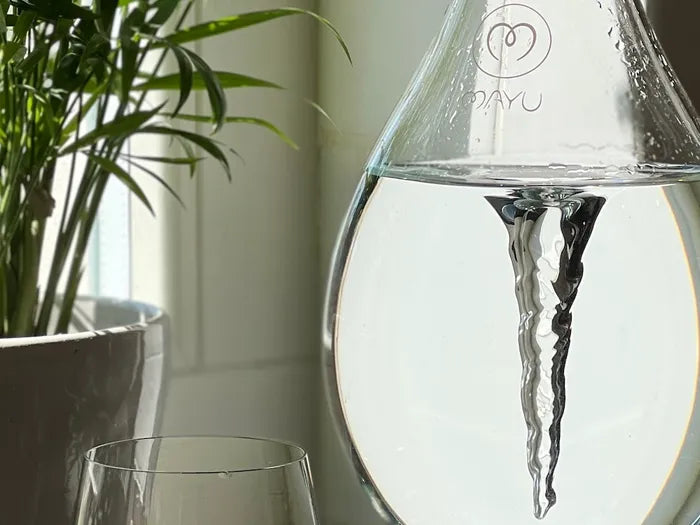
Reverse osmosis provides the most comprehensive PFAS protection, while activated carbon systems offer budget-friendly alternatives. Store filtered water in glass containers to prevent recontamination, and consider the MAYU Swirl to naturally structure and aerate your filtered water, enhancing taste and hydration while working perfectly with any PFAS filtration system.
» Learn more about MAYU's advanced water filtration technology
References
Al-Maqtari, Q. A., Ali Mahdi, A., & Othman, N. (n.d.). Comprehensive review of per- and polyfluoroalkyl substances in drinking water: Physiochemical properties, sources, health impacts, regulatory limits, and future perspectives. ScienceDirect. https://www.sciencedirect.com/science/article/pii/S2590123025032244
Per- and polyfluoroalkyl substances (PFAS). (n.d.). https://www.who.int/teams/environment-climate-change-and-health/water-sanitation-and-health/chemical-hazards-in-drinking-water/per-and-polyfluoroalkyl-substances
Fenton, S. E., Ducatman, A., Boobis, A., DeWitt, J. C., Lau, C., Ng, C., Smith, J. S., & Roberts, S. M. (2020). Per‐ and Polyfluoroalkyl Substance Toxicity and Human Health Review: Current State of Knowledge and Strategies for Informing Future Research. Environmental Toxicology and Chemistry, 40(3), 606–630. https://doi.org/10.1002/etc.4890
Disclaimer: The information published by Mayu Water is not a substitute for the expert knowledge, advice, and recommendations of trained professionals. We strongly recommend consulting with industry experts and primary or scientific sources before making any health, research-related, or other important decisions.